
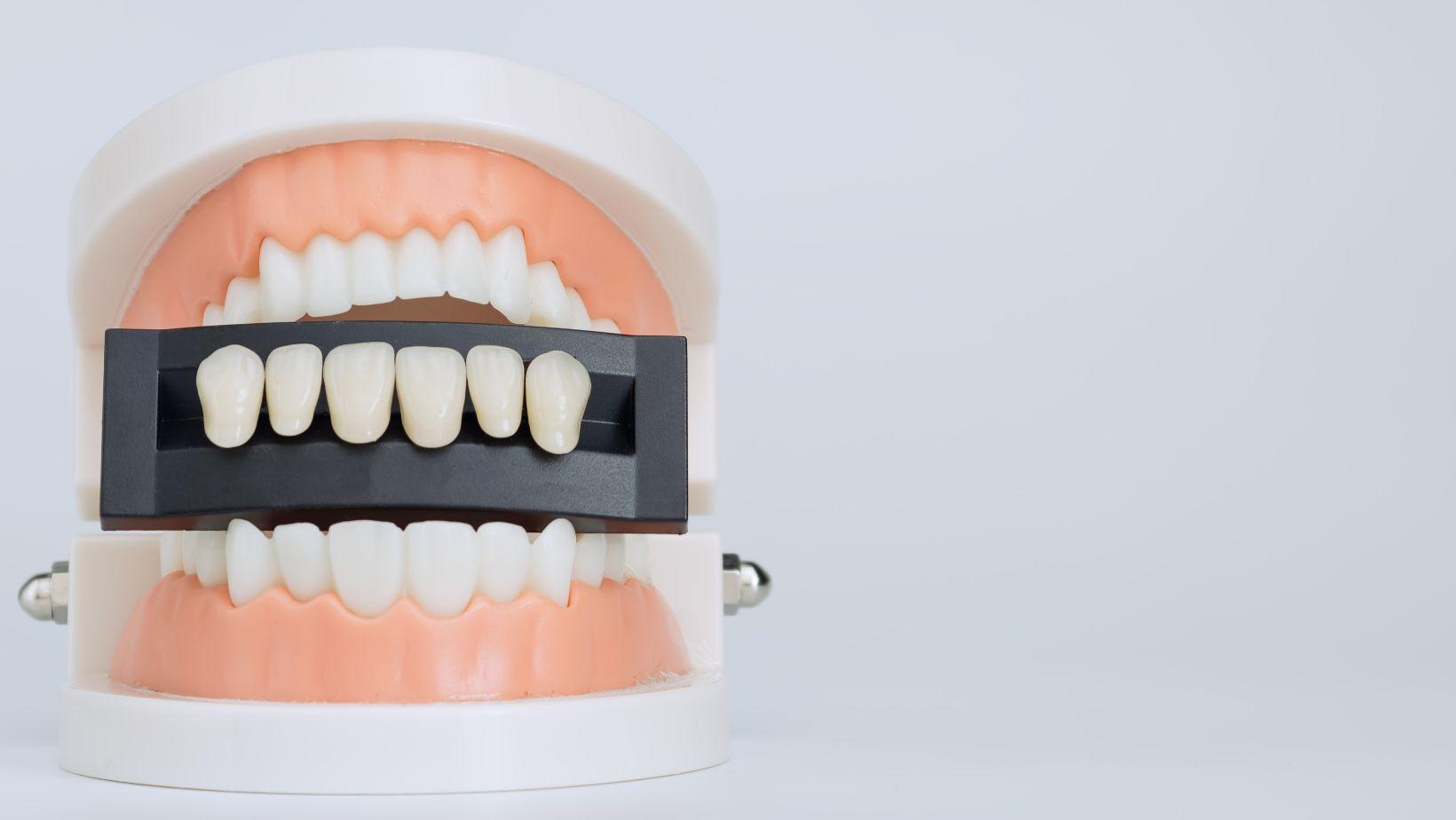

If you're replacing an entire upper or lower jaw, you don't need one implant per tooth. Most full mouth dental implants rely on a strategic set of implants—usually four to six—to support a fixed prosthesis.
Four implants can often stabilize a full arch. Five or six implants provide extra support for stronger biting and long-term stability.
You'll see how bone quality, bite force, and your choice between a fixed or removable prosthesis influence the recommended number of implants. I'll lay out common methods, what they mean for recovery and maintenance, and how implant count ties into longevity—so you can weigh what fits your life.
Table of Contents
ToggleKey Factors Influencing Implant Quantity
Several clinical and personal factors shape how many implants you’ll need for a full-arch restoration. These include the quality and volume of your bone, jaw shape and size, the restoration method, and your goals for function and appearance.
Bone Health and Density
Your jawbone’s volume and density play a big role in implant number and placement. Dense cortical bone can handle fewer, well-placed implants, while softer bone often needs more implants or a wider spread to share the load.
If you’ve lost bone, your surgeon might suggest bone grafting or sinus lifts in the upper arch before placing implants. These extra steps can allow for standard protocols—four to six per arch—but they add time and cost.
Your health history matters too. Things like uncontrolled diabetes or long-term smoking slow bone healing and might push your dentist to use more implants or different designs for added stability.
Jaw Size and Anatomy
Arch length and width affect how many implants you’ll need. A bigger upper jaw often needs more support points than a smaller lower jaw to prevent the prosthesis from bending.
Upper and lower jaws aren’t built the same. The upper jaw usually has softer bone and sits close to the sinuses, which can limit where and how long implants can be. The lower jaw’s thicker bone often lets you use fewer implants with solid stability.
Certain anatomy—like the nerve in your lower jaw or the height of your sinus floor—can dictate where and how many implants your surgeon can safely place. They’ll check all this with CBCT scans to figure out the safest and most effective plan.
Type of Restoration Technique
The design you choose for your restoration strongly affects implant count. Fixed one-piece prostheses often use at least four implants (the All-on-4 concept), but sometimes five or six for extra stability or less cantilever.
Removable implant-retained overdentures can work well with two implants in the lower jaw or four in the upper, offering good retention with fewer implants. Still, removable options might not meet everyone’s needs for stability or looks.
The material and layout of your prosthesis matter. A strong, full-arch zirconia bridge can handle force differently than an acrylic hybrid, sometimes letting you get by with fewer implants if your bone is solid.
Patient-Specific Needs
Your bite force, habits like grinding or clenching, and what you want your smile to look like all play into the implant count. Heavy grinders or clenchers might need more implants to spread out the load and lower the risk of breakage.
Budget, timeline, and willingness to do grafting matter too. If you want fewer surgeries and a lower upfront cost, your dentist might suggest an overdenture with fewer implants instead of a fixed bridge that needs more implants and grafting.
If you want more backup in case an implant fails down the road, adding extra implants gives you a safety net and can make repairs easier.
Comparison of Full Arch Implant Methods
You’ll find trade-offs among implant count, surgical complexity, bone needs, and long-term maintenance. The right method depends on your bone, budget, and what you want out of your new teeth.
All-on-4 Concept
All-on-4 uses four implants—two straight in the front, two angled in the back—to support a full-arch prosthesis. Angled back implants contact more bone and usually avoid sinus lifts or major grafting, so you might finish treatment faster and for less money.
Many practices provide a fixed provisional prosthesis the same day or soon after surgery. You’ll need routine cleanings and checkups, and the prosthesis might be screw-retained or hybrid. Success depends on good bite alignment and keeping things clean.
All-on-4 works well for people with some bone loss in the back who want fewer implants and a quicker fix. It might not reach all the way to your molars if you have a big jaw, so talk to your dentist about chewing coverage and how easy it’ll be to repair.
All-on-6 Approach
All-on-6 spaces six implants across the arch to boost support and spread out the load. The extra implants lower stress on each one and can help your prosthesis last longer, especially if you bite hard.
You might need more bone or grafting than with All-on-4, and surgery and cost usually go up. Still, with more implants, losing one won’t likely doom the whole prosthesis.
This is a good fit for folks who want long-term strength and want their prosthesis to reach as far back as possible. Maintenance is about the same as All-on-4—regular cleanings and the odd adjustment—but you might get better stability.
Traditional Implant Protocols
Traditional plans put in individual implants for each missing tooth or several spaced out to hold segmented or full-arch bridges. For a full arch, you’re looking at six to eight (sometimes more) implants to mimic natural tooth support.
Expect more surgeries and often a staged approach, with bone grafts or sinus lifts if you’re short on bone. Treatment can stretch from months to over a year, but you get flexibility—individual implants let you replace teeth one by one, and the prosthesis can be tailored for the best look and function.
This suits people with enough time and budget who want the tooth-by-tooth approach or maximum resilience. Maintenance means keeping up with implant-level hygiene and sometimes swapping out parts as the years go by.
Longevity and Stability Considerations
You want your prosthesis to hold up, chew evenly, and have a care plan that keeps both implants and bone healthy. Implant number, material, and placement all play into how long your restoration lasts and how well it works.
Prosthetic Support
Pick the implant number and layout to match your prosthesis style and material. Rigid, full-arch fixed bridges—like those made from zirconia or titanium-reinforced acrylic—do best with four to six well-spaced implants to cut down on flex and connector stress.
If you go with All-on-4, make sure the front implants are solid and the back ones are angled right to avoid overhanging parts. Details matter—controlled bite surfaces, reinforced connectors, and easy-to-access screw channels make future repairs simpler.
Ask your dentist if a removable overdenture or a fixed hybrid is better for your bone and bite.
Functional Load Distribution
Your bite force goes through the prosthesis and into the implants and bone. You can get away with fewer implants if they’re placed to spread out the load and minimize bending.
Putting back implants farther back and angling them right helps shorten overhanging sections and lowers stress. Consider your habits, what teeth you bite against, and implant size—bigger or longer implants spread the load better.
Sometimes, adjusting your bite—lighter contacts or shallower side-to-side movement—helps protect the implant-bone connection.
Long-Term Maintenance
Schedule routine follow-up visits every 3–6 months at first. After that, go in at least twice a year for hygiene care and prosthetic checks.
Your clinician checks implant mobility and peri-implant probing depths. They also look at radiographic bone levels and tighten prosthetic screws if needed.
Catching bone loss or a loose screw early really helps the implant last. It’s not always obvious to spot these things at home, so don’t skip your appointments.
For daily care, use oral hygiene tools that fit your prosthesis. Interdental brushes work well for screw-retained gaps.
If you have overdentures, water flossers make the job easier. Sometimes, your dentist might suggest antiseptic rinses.
If you smoke, quitting makes a big difference for your implants. Diabetics should keep blood sugar in check, and everyone should treat mucosal inflammation right away.
All these steps lower your risk of long-term complications. It’s a lot, but it pays off.